Cruise companies are rolling out more and bigger ships, and Florida’s big three cruise ports are doing all they can to keep up. Meanwhile, a Texas port stands ready to fill the industry’s growing needs
Port Canaveral’s CEO, Capt. John Murray, was nonplussed when Florida state officials sunk plans to build a seventh cruise terminal at a cargo berth.
The terminal was designed to meet growing demand from the booming cruise industry and its increasingly larger ships, but Florida’s commerce and transportation secretaries argued that repurposing North Cargo Berth 8 for the cruise sector would jeopardize the growth of the space industry.
Commerce secretary Alex Kelly and transportation secretary Jared Perdue even threatened to pull funding from Port Canaveral’s projects if it continued with the cruise terminal. Hence, the port authority’s board of commissioners voted 4-1 in late August to abandon those plans.
In a press conference following the vote, Murray said that with the world’s largest cruise companies on a ship-building spree, the cruise industry needed more terminal space. And, he said, Port Canaveral and Florida also need it so that those cruise ships don’t leave the state.
“Miami is full. Everglades is full. If we’re full, they’re going somewhere else,” Murray said about cruise ships. “And we don’t want large, brand-new assets moving over to Texas, California, New York. Because once it leaves, it’s next to impossible to get it back.”
While some of those Florida ports might not say that they’re “full,” the cruise industry has at least 40 ships on order over the next dozen years, many that will be bigger than existing ships. Cruise lines will need not only berths big enough for their ships, but terminals that can handle getting thousands of people and their luggage on and off these vessels. The smaller terminals built to accommodate ships of the past just won’t cut it, Murray said.
“It’s like trying to put everybody on a 747 aircraft at a 737 gate,” he said.
While Port Canaveral is unique in dealing with the competing interests of space travel, it is not alone among Florida ports that are considering the cruise industry’s growth and needs.
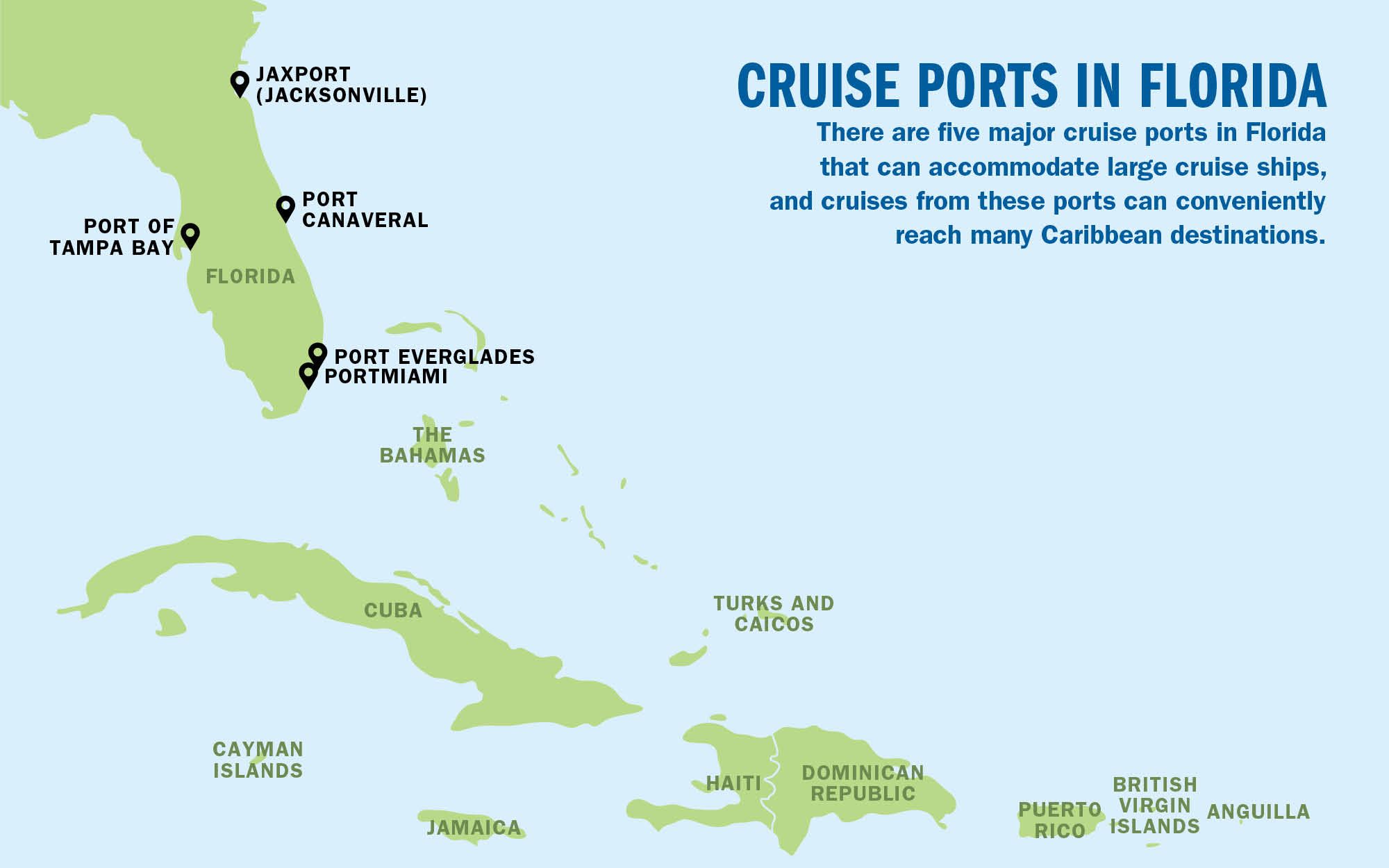
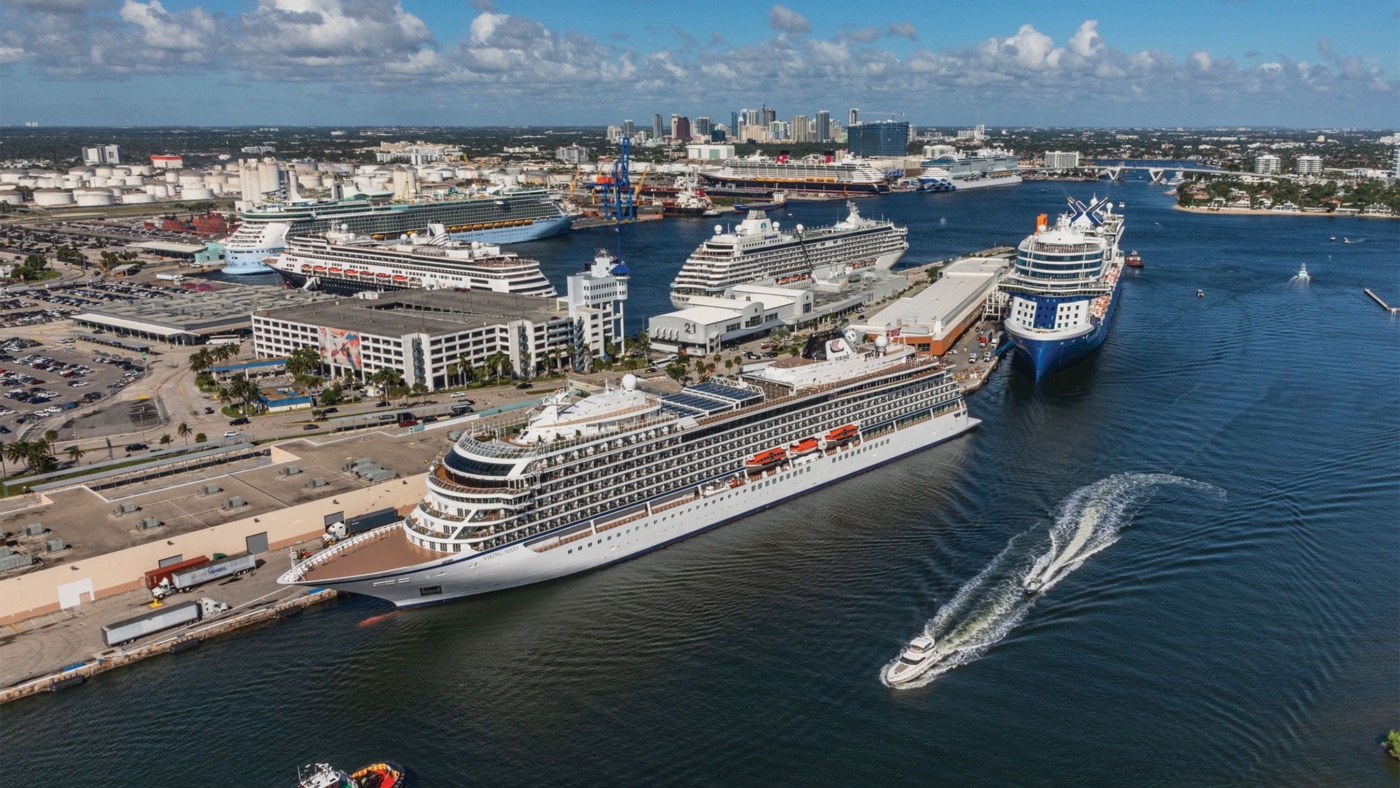
Officials at Florida’s Big Three cruise ports, Port Canaveral, PortMiami and Port Everglades, are working to keep up with demand by constructing new berths and terminals, renovating old ones and getting creative with cruise schedules. And while these ports may compete with each other, they share the common goal of keeping as many cruise ships as possible at home in the Sunshine State.
It’s difficult to overstate the importance of Florida to the cruise industry. It’s the state where modern cruising was born and from where many cruise ships sail year-round. Even ships that cruise elsewhere throughout the year often return to Florida in the winter months, attracting vacationers escaping the cold. Cruise lines have also built several private Caribbean destinations within close proximity to Florida, making them an integral part of the cruise experience and major demand and revenue generators.
Capacity constrained
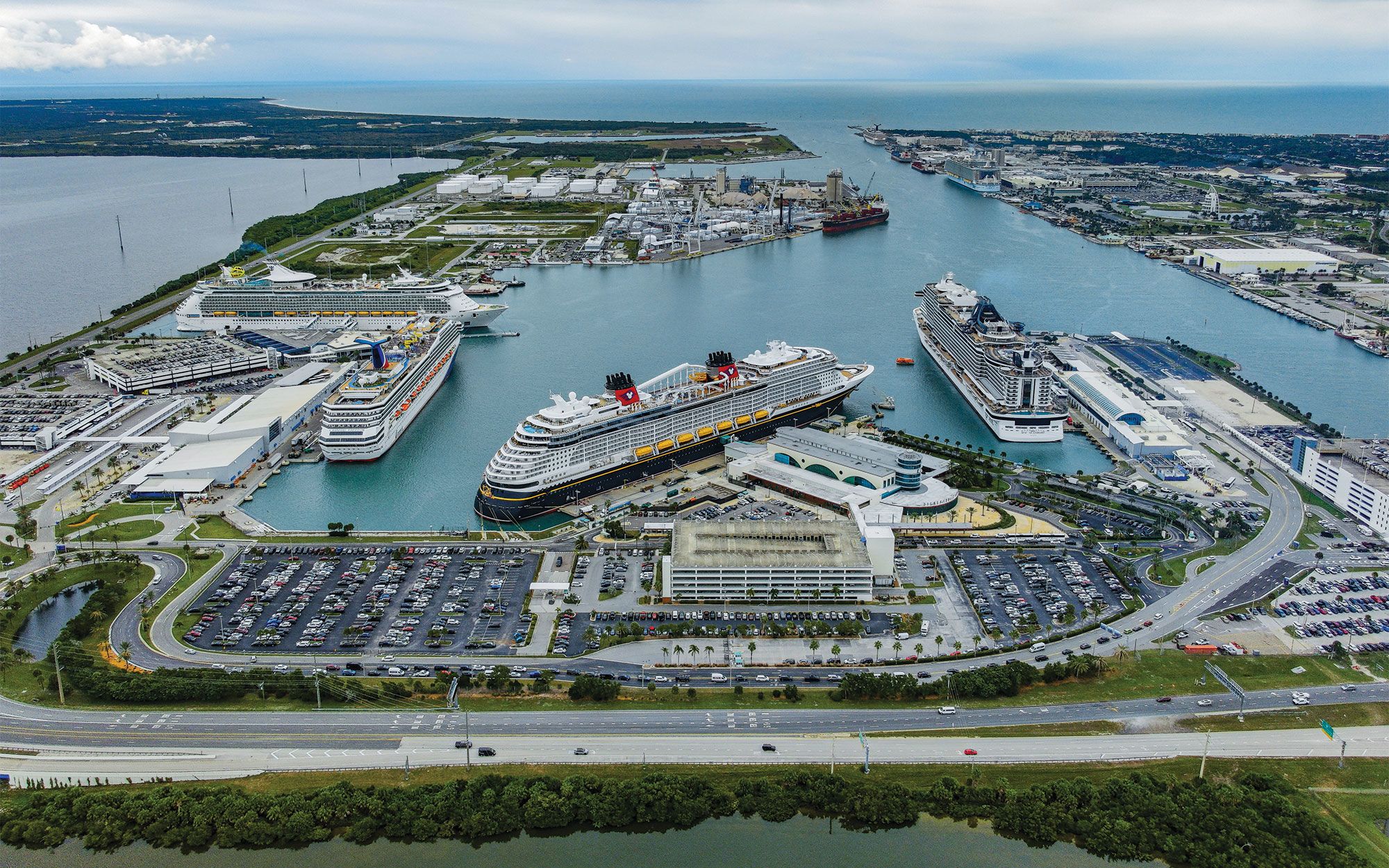
Sitting an hour east of Orlando in Central Florida, Port Canaveral has grown in recent years. Today it is the second-busiest cruise port in the world after PortMiami.
Long a homeport for older ships sailing short cruises to the Bahamas and private destinations, Port Canaveral now attracts some of the industry’s newest and largest tonnage. With a strong drive market due to its proximity to the southeastern U.S., Canaveral recorded 7.6 million passenger movements in the fiscal year that ended Sept. 30, a 12% bump from the year prior, the port said. Murray said he expects to reach 8.4 million passenger movements this year.
“If we had that terminal now, we could fill it,” Murray said about the stymied port project during a state of the port address in late November.
The derailment of the those plans led Murray to lean into other projects. Port Canaveral’s berths are generally big enough for the largest cruise ships, but some of its terminals have needed modifications to improve passenger and baggage flow, particularly ones built 30 years ago when the largest cruise ships carried 2,500 passengers, he said. Other terminals are now due for such upgrades.
Back then, those older terminals couldn’t have accommodated ships like Norwegian Cruise Line’s (NCL) upcoming Norwegian Aqua, which will carry about 3,600 guests at double capacity when it begins sailing from Port Canaveral in April, or Royal Caribbean International’s 5,610-passenger Star of the Seas when it starts sailing from the port in August. If loaded with third and fourth berths, the Star could board as many as 7,500 passengers.
The Aqua and Star will dock at larger or recently renovated terminals when they arrive in Port Canaveral. The port is also redeveloping Cruise Terminal 5 to handle larger volumes of people, and it launched a feasibility study to do the same for Cruise Terminal 10. Both would serve multiple cruise lines, enabling the port to mix and match ships instead of being committed to one cruise line as is the case at other branded terminals.
MSC Cruises is also looking to homeport in Port Canaveral. The line is opting to position its fourth and yet-unnamed World-class ship there for seven-night cruises in the winter 2027-2028 season, in addition to sailing two other ships from the port.
But Murray is not giving up on his hopes to free up a seventh berth for cruises. He is pursuing two possibilities on the south side of the port, where he originally wanted to build a big berth, terminal and parking garage. Both possibilities come with obstacles: One involves tenant requirements that need to be resolved before the space can be freed up as a cruise berth, and the other includes moving an Air Force communication line underneath the harbor.
Those complications could mean another four or five years before a new cruise terminal opens, Murray said. But if he can get one of those terminals built by 2028, he added, the port won’t have to turn away cruise business.
While Murray stands by his assertion that the Big Three Florida ports are “full,” Norwegian Cruise Line Holdings (NCLH) CEO Harry Sommer has a different perspective.
Like Murray, Sommer was unhappy that state officials voted against Port Canaveral’s cruise berth plans, especially because NCL’s Norwegian Joy was expected to sail from that terminal when it opened in 2026.
Sommer chided the state while onstage at the CruiseWorld conference in November, saying the new terminal would have attracted “a million” cruisers and “benefited the whole industry” instead of a handful of space tourists.
“Seems a little bit unbalanced to me,” Sommer said, sarcastically adding, “I’m not bitter.”
Still, when Sommer looks at the availability at Florida’s Big Three cruise ports, he said they are only full during peak times, such as Saturdays and Sundays in the winter. Finding space requires creativity, he said.
“I think what you’ll see us [doing] is expanding to cruises that aren’t just seven-day cruises leaving in the winter on a Saturday or Sunday,” he said.
NCLH is also positioning its ships at other Florida ports. NCL has one ship sailing out of Jacksonville and two from Tampa. Sister brand Oceania will also sail out of Tampa, a first for the brand, starting in March 2026.